

5.21.8-3a0679940958133.1 MB
AGPL-3.0-only
strict
core24
LXD - container and VM manager
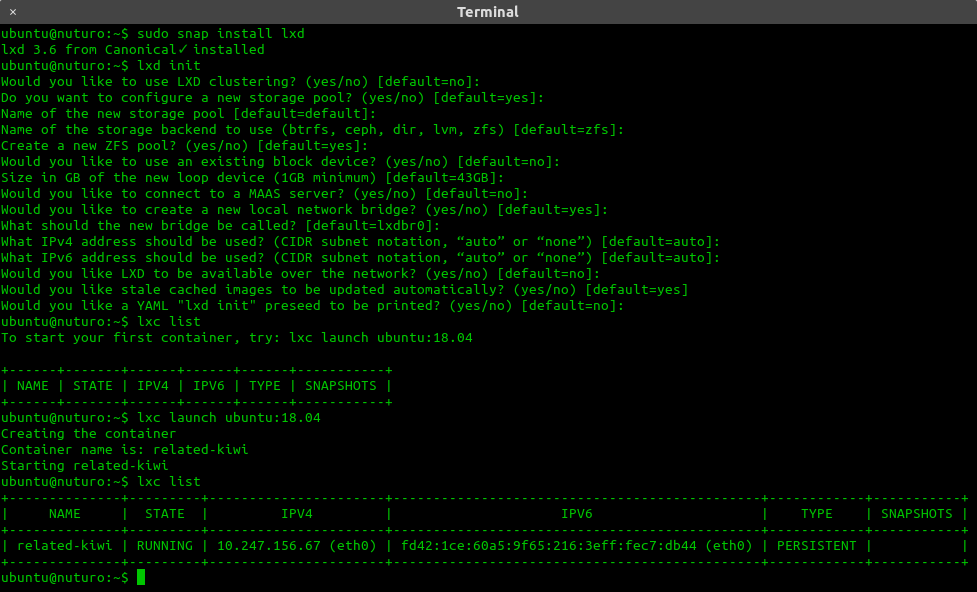
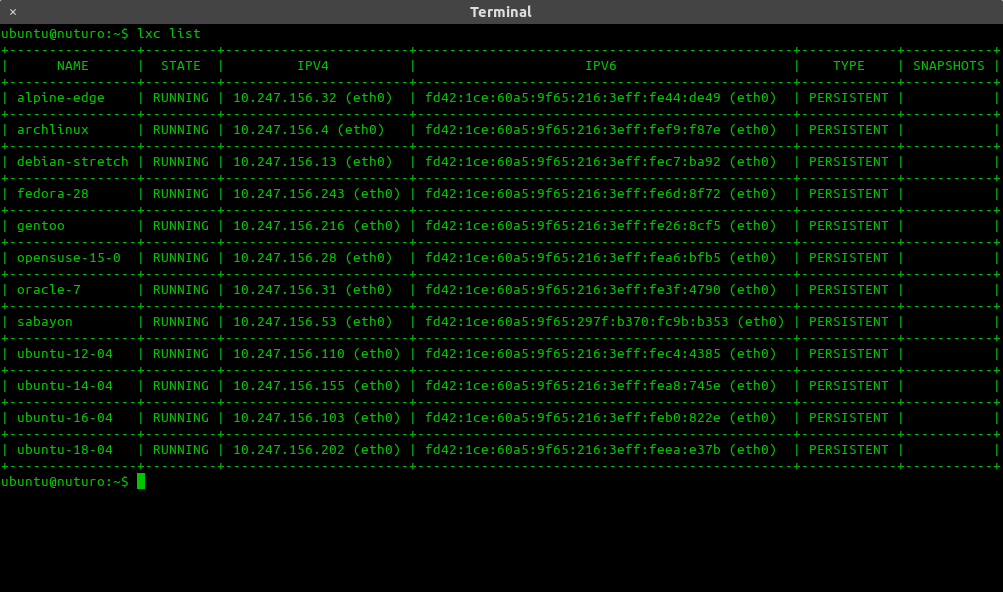
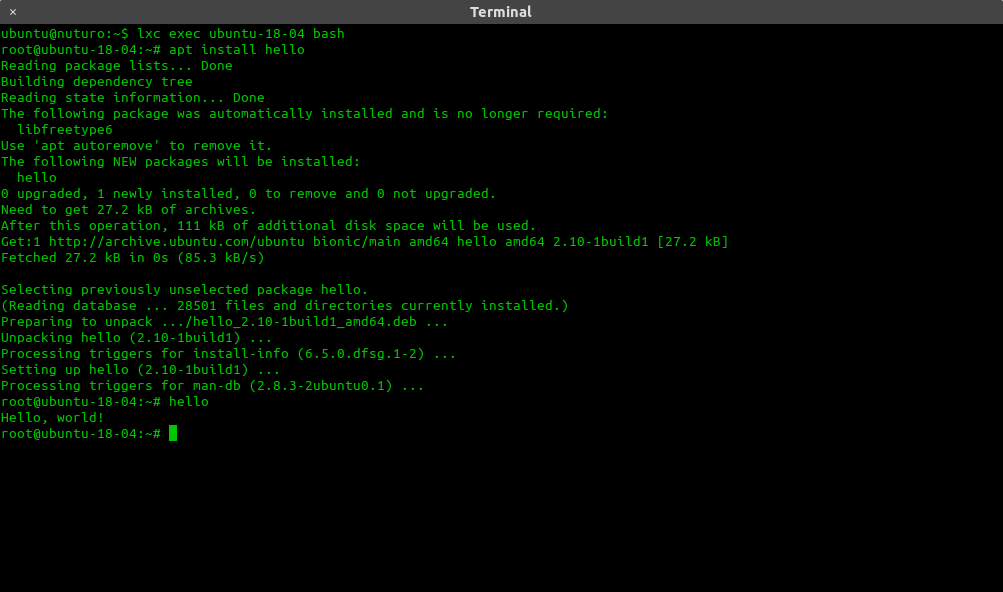
LXD is a system container and virtual machine manager.
It offers a simple CLI and REST API to manage local or remote instances,
uses an image based workflow and support for a variety of advanced features.
Images are available for all Ubuntu releases and architectures as well
as for a wide number of other Linux distributions. Existing
integrations with many deployment and operation tools, makes it work
just like a public cloud, except everything is under your control.
LXD containers are lightweight, secure by default and a great
alternative to virtual machines when running Linux on Linux.
LXD virtual machines are modern and secure, using UEFI and secure-boot
by default and a great choice when a different kernel or operating
system is needed.
With clustering, up to 50 LXD servers can be easily joined and managed
together with the same tools and APIs and without needing any external
dependencies.
Supported configuration options for the snap (snap set lxd [<key>=<value>...]):
- apparmor.unprivileged-restrictions-disable: Whether to disable restrictions on unprivileged user namespaces [default=true]
- ceph.builtin: Use snap-specific Ceph configuration [default=false]
- ceph.external: Use the system's ceph tools (ignores ceph.builtin) [default=false]
- criu.enable: Enable experimental live-migration support [default=false]
- daemon.debug: Increase logging to debug level [default=false]
- daemon.group: Set group of users that have full control over LXD [default=lxd]
- daemon.user.group: Set group of users that have restricted LXD access [default=lxd]
- daemon.preseed: Pass a YAML configuration to
- daemon.syslog: Send LXD log events to syslog [default=false]
- daemon.verbose: Increase logging to verbose level [default=false]
- db.trace: Enable dqlite trace logging (very verbose) [default=false]
- lvm.external: Use the system's LVM tools [default=false]
- lxcfs.pidfd: Start per-container process tracking [default=true]
- lxcfs.loadavg: Start tracking per-container load average [default=false]
- lxcfs.cfs: Consider CPU shares for CPU usage [default=false]
- lxcfs.debug: Increase logging to debug level [default=false]
- minio.path: Path to the directory containing the minio and mc binaries to use with LXD [default=""]
- openvswitch.builtin: Run a snap-specific OVS daemon [default=false]
- openvswitch.external: Use the system's OVS tools (ignores openvswitch.builtin) [default=false]
- ovn.builtin: Use snap-specific OVN configuration [default=false]
- ui.enable: Enable the web interface [default=true]
- zfs.external: Use the system's ZFS tools [default=false]
For system-wide configuration of the CLI, place your configuration in
/var/snap/lxd/common/global-conf/ (config.yml and servercerts)
It offers a simple CLI and REST API to manage local or remote instances,
uses an image based workflow and support for a variety of advanced features.
Images are available for all Ubuntu releases and architectures as well
as for a wide number of other Linux distributions. Existing
integrations with many deployment and operation tools, makes it work
just like a public cloud, except everything is under your control.
LXD containers are lightweight, secure by default and a great
alternative to virtual machines when running Linux on Linux.
LXD virtual machines are modern and secure, using UEFI and secure-boot
by default and a great choice when a different kernel or operating
system is needed.
With clustering, up to 50 LXD servers can be easily joined and managed
together with the same tools and APIs and without needing any external
dependencies.
Supported configuration options for the snap (snap set lxd [<key>=<value>...]):
- apparmor.unprivileged-restrictions-disable: Whether to disable restrictions on unprivileged user namespaces [default=true]
- ceph.builtin: Use snap-specific Ceph configuration [default=false]
- ceph.external: Use the system's ceph tools (ignores ceph.builtin) [default=false]
- criu.enable: Enable experimental live-migration support [default=false]
- daemon.debug: Increase logging to debug level [default=false]
- daemon.group: Set group of users that have full control over LXD [default=lxd]
- daemon.user.group: Set group of users that have restricted LXD access [default=lxd]
- daemon.preseed: Pass a YAML configuration to
lxd init on initial start- daemon.syslog: Send LXD log events to syslog [default=false]
- daemon.verbose: Increase logging to verbose level [default=false]
- db.trace: Enable dqlite trace logging (very verbose) [default=false]
- lvm.external: Use the system's LVM tools [default=false]
- lxcfs.pidfd: Start per-container process tracking [default=true]
- lxcfs.loadavg: Start tracking per-container load average [default=false]
- lxcfs.cfs: Consider CPU shares for CPU usage [default=false]
- lxcfs.debug: Increase logging to debug level [default=false]
- minio.path: Path to the directory containing the minio and mc binaries to use with LXD [default=""]
- openvswitch.builtin: Run a snap-specific OVS daemon [default=false]
- openvswitch.external: Use the system's OVS tools (ignores openvswitch.builtin) [default=false]
- ovn.builtin: Use snap-specific OVN configuration [default=false]
- ui.enable: Enable the web interface [default=true]
- zfs.external: Use the system's ZFS tools [default=false]
For system-wide configuration of the CLI, place your configuration in
/var/snap/lxd/common/global-conf/ (config.yml and servercerts)
Update History
5.21.7-1018661 (40585) → 5.21.8-3a06799 (40958)23 Sept 2026, 16:15 UTC
5.21.6-78b046a (40361) → 5.21.7-1018661 (40585)24 Aug 2026, 09:15 UTC
5.21.5-f2a1a0e (40074) → 5.21.6-78b046a (40361)31 Jul 2026, 09:15 UTC
5.21.4-aee7e08 (38767) → 5.21.5-f2a1a0e (40074)5 Jul 2026, 15:30 UTC
6.7-d814d89 (38768) → 5.21.4-aee7e08 (38767)14 Apr 2026, 18:00 UTC
6.7-d814d89 (38768) → 5.21.4-1374f39 (38368)1 Apr 2026, 21:28 UTC
6.7-12e2019 (38450) → 6.7-d814d89 (38768)1 Apr 2026, 10:37 UTC
24 Aug 2016, 19:54 UTC
22 Sept 2026, 19:28 UTC
13 Dec 2025, 09:47 UTC